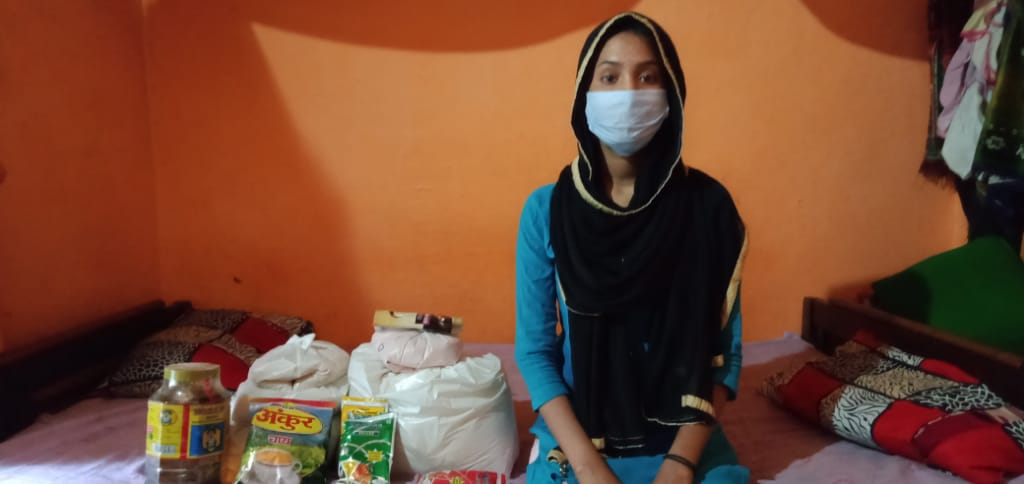
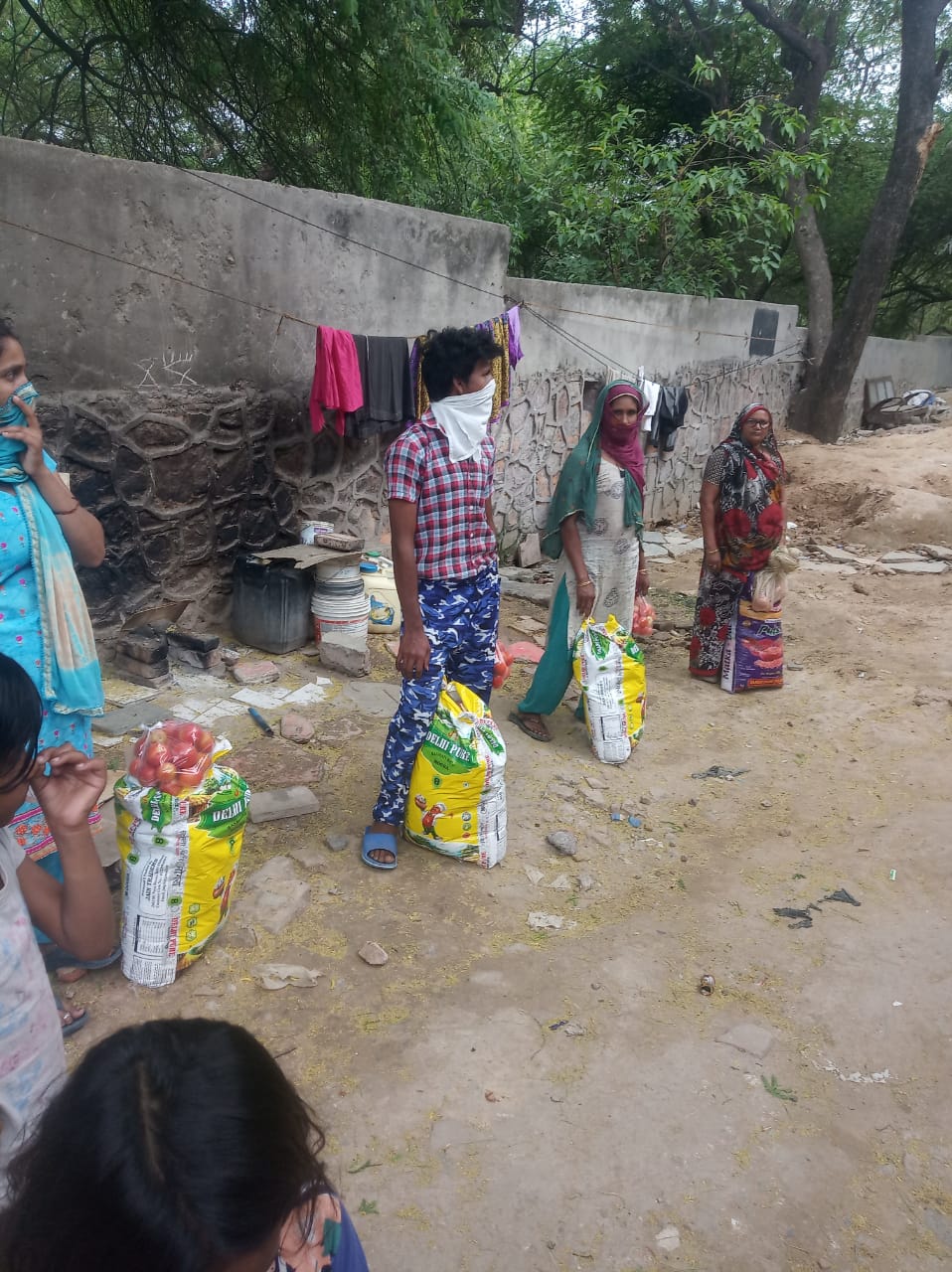
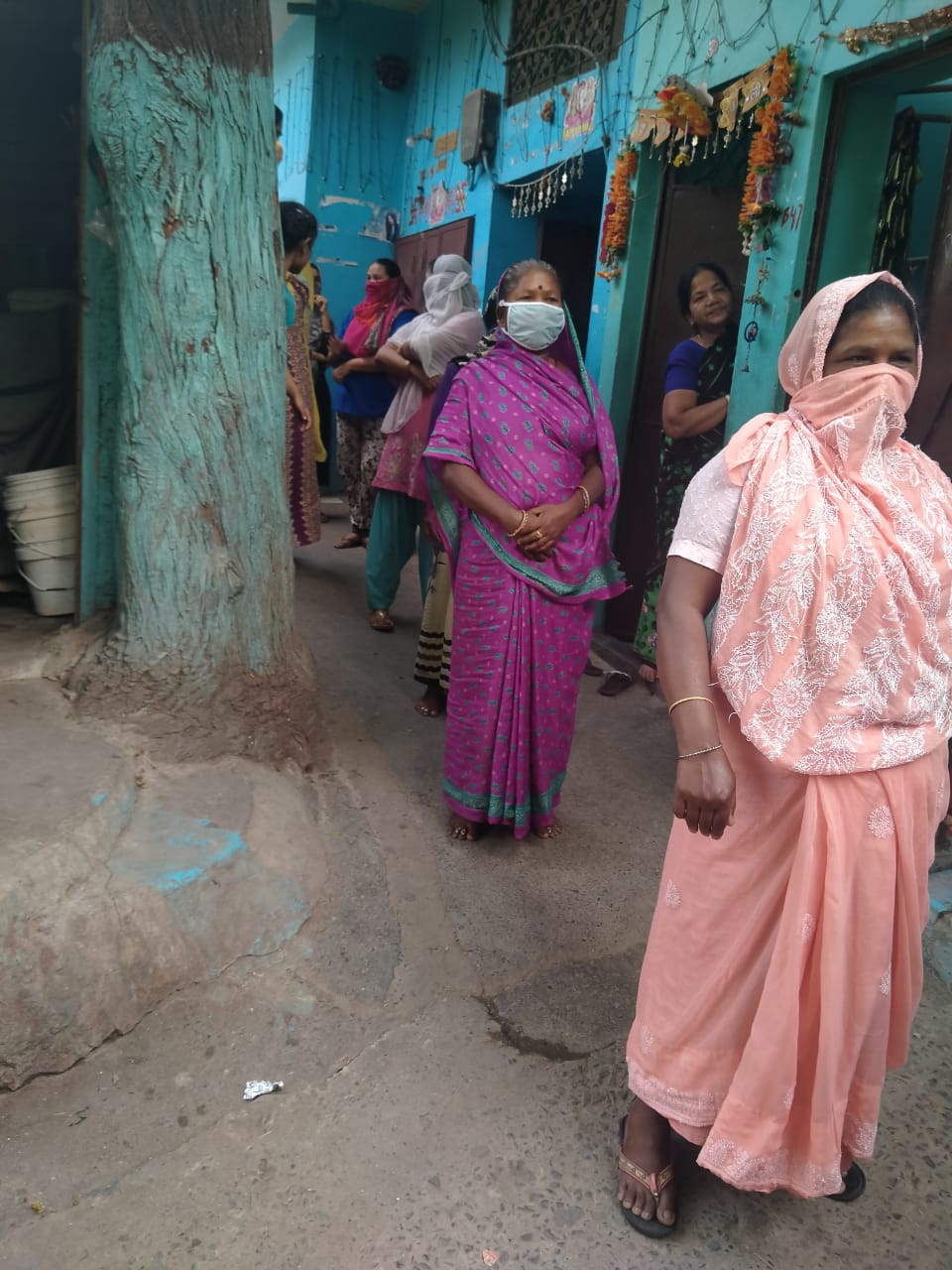
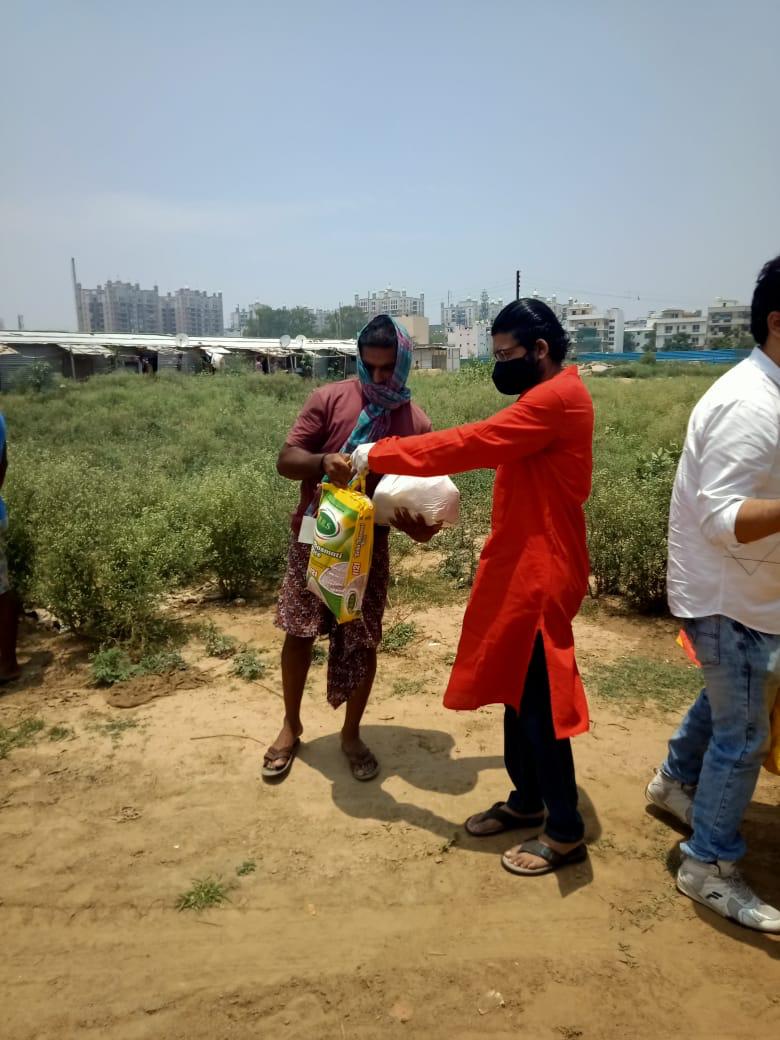
Peepal Tree foundation is reaching out to less privileged families in slums of Delhi, with groceries, soaps, hand wash and sanitary towels etc. In our own small way we have reached out to around 250 families so far serving around 1200 individuals. We am humbled and truly thankful to our donors, friends and family overseas for your contribution! Pls get in touch to know more smitaroy@peepaltreefoundation.
As we all continue to reel in the grip of COVID 19, we agree that the worst hit are definitely the daily wageworkers. The impact of the pandemic has been immense, especially on incomes and lost livelihoods. Peepal Tree Foundation has been working with people at the base of the pyramid across differently slums in Delhi NCR over the last 2 years. We have first hand reports from these slums about the grim situation where there are families grappling with survival issues. This coupled with home confinement has led to an increase in domestic violence and even small community riots.
PHASE 1: DRY RATION DISTRIBUTION
The first phase of PTF Covid19 efforts is immediate relief work by way of dry ration distribution.
PTF Covid19 Relief Initiative
In the slums that we partner with, families have been identified who are victims of this pandemic, specifically families who do not have ration cards and PTF reached out to them with immediate relief by way of dry ration.
Started with just 11 families in Munirka Basti, in South of Delhi, PTF in Phase 1, Part 1 has reached to over 250 families attending to about 1300 individuals across several slums across Delhi in the last 2 months, providing ration to run kitchen in the household.
https://www.facebook.com/635084704/posts/10158211337459705/?d=n
Plan Forward
The situation is unlikely to ease up in the near future and even if it does, many daily wagers may not be able to find work with the economy being hit.
PTF plans to continue this relief work to support such identified families in a phased manner.
Phase I, Part 2
Fortnightly ration has been distributed to the below mentioned slums:
Name of the slum | Status | Number of families |
Ghoshala, Gurgaon | Round 1 | 40 |
Kishan Gargh Vasant Kunj | Round 1 | 20 |
Hauzrani | Round 2 | 45 |
B2 Vasant Kunj | Round 2 | 35 |
Munirka | Round 2 | 75 |
Hauz Khas | Round 2 | 35 |
Total of 250 families in immediate need are proposed to be covered;
What are we providing? Each kit will have the following items:
Item | Quantity | App total price in Rs. |
Rice | 10kgs | 450 |
Aata | 5 kgs | 225 |
Sugar | 2 kgs | 80 |
Tea | 500 gms | 50 |
Oil | 2 kgs | 150 |
Dal (masoor) | 2kgs | 170 |
Dal (Moong) | 2kgs | 170 |
Masala: Haldi, jeera pd, Dhaniya pd | 200gms each | 60 |
Salt | 1kg | 20 |
Onions | 2 kgs | 100 |
Tomato | 2 kgs | 100 |
Potato | 2kgs | 100 |
Soap | 2 bars | 30 |
Hand wash | 1 (200ml) | 50 |
Detergent Soap | 2 Bars | 30 |
Hair oil | 200ml | 30 |
Sanitary Napkin | 1 pack | 80 |
Total | 1895 |
Delivery Charges: Rs 800 per trip within Delhi. We need to make at least 6 trips.
PHASE 2 A: PRODUCTION AND DISTRIBUTION OF FACE MASKS & GLOVES
Social distancing and wearing masks are probably two most effective ways to keep oneself safe from Coronavirus. And as the virus continues to increase at an aggressive pace, proper preventive and protective gear will be crucial for all in the near future. A standard face mask helps in prevention of droplets travelling to the wearer’s face/ nose thereby preventing them from contracting infection more effectively, as compared to a simple piece of cloth covering the face/nose.
Common practice observed in Bastis
Current practice in slums, as observed, is to use a dupatta for women or a simple home made cloth mask with available material, and a folded hand kerchief for men.
These practices while welcome in absence of any other gear available can provide only a partial protection. As per the advisory issued through Manual on face masks by GOI (Refer : Masks for curbing the spread of SARS-CoV-2 Coronavirus; a manual on homemade masks issued by GOI) problems with these practices can be:
- Fabric : Often in bastis any cloth that is readily available is used to cover the mouth. It may be of synthetic material or not 100% cotton and/or not thick enough with enough layers to prevent passage of droplets.
- Size: The makeshift mask may not large enough to cover nose and chin; or not secured properly due to lack of proper mechanism
- Sanitization of fabric: The fabric used for the masks may not be sanitized properly by boiling before making the mask.
For curbing the spread of virus, Phase 2 of PTF Covid19 strategy involves stitching and distribution in bastis of standard face masks as specified in the GOI guidelines.
Phase 2, Part 1: PTF stitching of standard masks
PTF’s partner underprivileged women in bastis have suspended creating other products and have started the task of stitching face masks for adults and children according to government guidelines standards.
PTF face masks being stitched will have the following specifications:
- Fabric: Scientists have found that only a double layer 100% cotton cloth is most effective (as much as 70% as compared to surgical masks) for capturing small particles and is breathable; that comes to 180 gsm cotton fabric thickness.
- Size: As per the guidelines the adults masks should be of the size that appropriately covers the mouth, nose and chin of the wearer and PTF masks will adhere to the required size.
- Sanitization: Prior to stitching, proper treatment of fabric by boiling for 7 minutes in salted water will be carried out.
Phase 2, Part 2 : Distribution of face masks in slums and rural areas
We intend to start distribution of PTF face masks immediately to adults and children in 8 slums across Delhi NCR. Details are as follows:
Name of the Slum | Number of families | Total persons @ approx 5 members/ fam |
Munirka Goan Cluster 1 Cluster 2 | 200 | 1000 |
Hauz khas village | 80 | 400 |
B2 basti Vasant Kunj | 123 | 615 |
Kishangargh village basti Vasant Kunj | 100 | 500 |
Gurgaon (3 slums) | 200 | 1000 |
Kalkaji slum | 78 | 390 |
Rangpuri Pahari | 100 | 500 |
Total | 681 | 4405 |
Cost Estimate
Total Cost/ mask: Rs 50/unit
PHASE 2 B: PROJECT SAFAR
Project Safar is another Covid Relief initiative supported by Peepal Tree Foundation.
Project Safar reaches out to arrange transport for migrant labourers stranded away from home. During the lockdown, many families had to resort to walking hundreds of kilometers due to the lack of accessible means of transport.
Started by students of Ashoka University, in association with Peepal Tree Foundation, funds are being raised to finance arrangements to
bring these families home.
So far safe travel of 44 migrant labourers from Bombay to Ranchi, via 2 flights has been arranged, the safest n fastest mode of transport in these challenging time. Transfers on both sides was arranged by buses.
Logistical concerns in-between such as medical health check-ups, permits, food, masks and the
presence of on-ground volunteers were given special consideration.
PHASE III: VIDYA TARANG
VIDYA TARANG aims at creating a platform for online classes, giving equal opportunity for education to less fortunate children, by using smart devices and conducting regular classes on Google Meet/Google classroom.
COVID19 has created challenging times. Online classes are the only hope for less privileged children to continue to access education. However, in urban slums and rural areas are losing out due to lack of availability of classes’ and no access to devices.
Keeping up with basic education is a challenge by itself among the underprivileged children. Our experience of working with children in slums indicates that a child is more susceptible to drop off school under severe family conditions. We believe this long gap of staying away from the regular routine of going to school may result it permanent drop off from school.
It’s a huge task to convince children and reinstate them to school.
A Smart Device can create interest in children and reinstate the enthusiasm and discipline amongst them.
We believe children will feel an enhanced sense of self-esteem, confidence and a feeling of inclusivity.
Objective of Vidya Tarang is :
To create ‘Resource Rooms’ or self contained virtual classrooms aiding to resume academics for underprivileged children in slums – govt schools and other private schools.
How do we want to do?
Step 1:
A campaign designed to collect
- Spare devices (Mobiles, laptops and tablets) in working condition.
Drop off point: 226A Hauzrani, Malviya Nagar, Delhi 110017
Contact Person Farida +91 8700879723
- Teachers who can commit at least 1hr a day in a week for 1 hour to conduct virtual sessions for our underprivileged children in slums.
Contact us at vidyatarang@peepaltreefoundation.org
Step 2:
Start online sessions via ‘Google Classroom’.